Author: tygas

  • Prompt Engineering – an Art, a Science, or your next Job Title?

    Prompt Engineering – an Art, a Science, or your next Job Title?

    Writing act as an … is not the end of writting a good prompt. There are better tools and techniques.

    Build high-quality LLM apps – from prototyping, testing to production deployment and monitoring. https://github.com/microsoft/promptflow


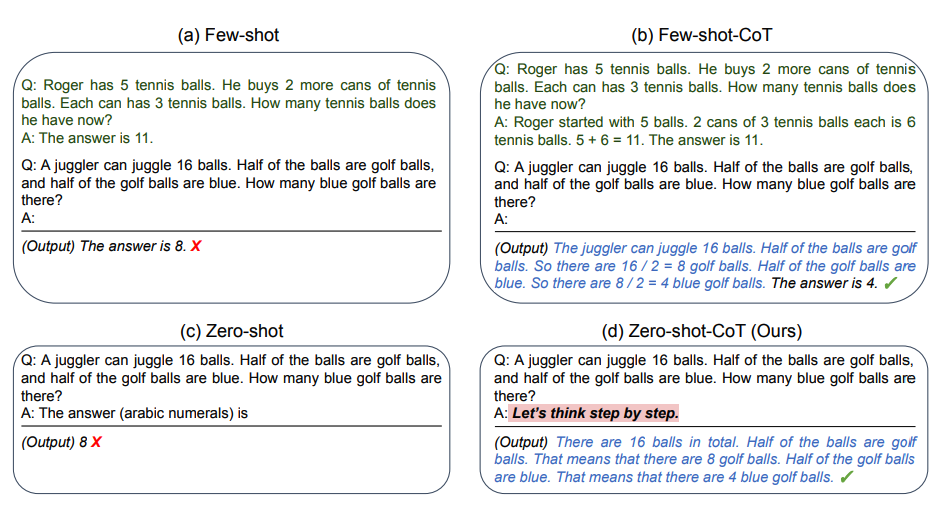
    Chain of thought prompting example:

    @webmaxru from https://promptengineering.rocks/


    If you want to take a short training to upskill in the prompt engineering go to: https://learn.deeplearning.ai/chatgpt-prompt-eng/lesson/3/iterative


    PS: Buildstuff speakers twitter / x account list currated by me
    @Tygas
  • UI trends in 2023 by @tejaskumar_


    React is the slowest way to build apps.
    Qwik ships only 1Kb of JS as uses deterministing approach to give you only code you need while you havent’t triggered it.


    @tejaskumar_

  • Your First AI App using ChatGPT and LaMDA


    Vercel has a multi model SDK, where you can write same code and jest by adding different SDK communicate with different models.

    Using #opensource models like google LaMa or meta llama as you do not need to pay for licence.

    Run models locally with Ollama

    Model does need context, so you need to send

    Workshop Code

  • Create Atomic Habits to Become a Better Developer #buildstuffconf

    Create Atomic Habits to Become a Better Developer #buildstuffconf

    • Habit Formation:
      • Describes the four stages of habit formation: cue, craving, response, reward.
      • Outlines four rules for building good habits, corresponding to each stage.
      • Uses the example of checking phone notifications as a habit to explain the rules.
    • Implementation of Habits:
      • Shares personal habits focused on becoming a better developer.
      • Emphasizes setting specific implementation intentions, stacking habits, and bundling new habits with desired activities.
      • Highlights the importance of reducing friction, making actions easy, and connecting actions immediately after completion.
      • Advocates for habit tracking as a gamification technique for maintaining streaks.
      • Two minute rule – always stay below the point where it feels like a work. Do at least one #coursera
      • Reduce friction – minimize actions you need to take ( have a bookmarked page, setted up enviroment)

    • Breaking Bad Habits:
      • Discusses strategies for making bad habits unattractive, difficult, and unsatisfying.
      • Stresses the value of an accountability partner and even publishing a habit contract to the world.
      • A commitment device A choice you make in the present tht controls your actions in the future
    • Results and Impact:
      • Reports personal success using these habits, including a job promotion and improved focus.
      • Encourages the audience to start working on tiny habits for personal development.
    • Q&A:
      • Addresses questions about the duration of using these techniques, adapting habits to circumstances, and the applicability of habits to developers at different career stages.
    • Key Takeaways:
      • Small, consistent changes lead to significant results.
      • Lifelong learning is crucial for personal and professional development.
      • Personal examples demonstrate the effectiveness of atomic habits.

    #buildstuff2022

    Official slides: https://www.slideshare.net/NatanSilnitsky/create-atomic-habits-to-become-a-better-developer

    @NSilnitsky

  • Kevlin Henney – Refactoring Is Not Just Clickbait #buildstuffconf

    Kevlin Henney – Refactoring Is Not Just Clickbait #buildstuffconf

    • Refactoring as Design Practice: Henney emphasizes that refactoring is not just about quick shortcuts or large-scale re-engineering. It is a design practice essential for maintaining code quality and understanding.

    Make code as open to modification as possible.
    Keep code simple by resisting the temptation to make it extensible in the absence of any requirements to do so.
    • Complexity and Developers: Developers are drawn to complexity, often seeking creative solutions to problems. However, Henney suggests that refactoring is a way to navigate complexity, making code more understandable and manageable.
    • Technical Debt: Henney distinguishes between possessing technical debt and unmanaged technical debt. He argues that the possession of technical debt is not a problem; the key is how well it is managed and structured.
    • Metaphor for Messy Code: Henney introduces a metaphor for messy code, describing how developers can’t stop thinking about it. Refactoring provides a way to take oneself to a clean and tiny context, making developers feel comfortable and safe while working on it.
    • Refactoring Process: Refactoring is portrayed as a process of discovery and recognition, a reactive design practice. It involves restructuring software through a series of small, focused changes that do not alter the observable semantic behavior of the software. Automation is associated with refactoring, but the focus is on preserving the program’s behavior.

  • Review of The Art of Loving by Erich Fromm

    I was recomended to read this book during the Da Vinci trainings. Tomas said it changes the way how you think about love and what is needed to cultivate it.

    Here is my action plan to changing your approach to loved ones based on the book The Art of Loving by Erich Fromm could look something like this:

  • Side projects realities –  lessons from the grind

    Side projects realities – lessons from the grind

    • start simple: don’t overcomplicate, iterate often.
    • embrace feedback: even if it stings, it’s gold.
    • persistence over perfection: consistency trumps rare moments of genius.
    • community matters: connect, share, learn.
    • monetizing? test early, refine based on real-world response.
    • know when to pivot: or when to pause.
    • celebrate small wins: they add up.
    • maintain balance: burnout’s real, look after yourself.
  • How to become front end architect?

    Becoming a front end architect is an ambitious goal, but one that can be achieved with dedication and hard work. A front end architect is responsible for designing and building complex web applications from the ground up, so it’s important to have a strong background in programming languages like React and TypeScript. In order to become a successful front end architect, you must first understand the fundamentals of software engineering principles such as design patterns, algorithms, data structures and object-oriented programming concepts. Additionally, you should possess excellent problem solving skills as well as knowledge of different frameworks used in web development.

    The next step towards becoming a successful frontend architect involves gaining experience by working on projects using various technologies including HTML/CSS/Javascript along with other libraries or frameworks like ReactJs or AngularJs . This will help build your confidence when tackling complex problems related to architecture design decisions while also giving you hands-on experience dealing with real world scenarios within large scale applications . It would also benefit greatly if one has prior knowledge about version control systems (such Git) which helps manage code changes across multiple developers simultaneously while keeping track of progress made throughout development cycles .

    Finally , once comfortable enough working on projects , it’s time for aspiring architects to start focusing more heavily on their craft by studying industry best practices regarding coding standards , application performance optimisation techniques & security protocols among others ; this way they’ll be able increase their chances at getting accepted into reputable positions where they can make significant contributions towards developing robust user experiences & scalable architectures fit for modern day challenges faced by businesses around the globe today . By following these guidelines any individual could potentially carve out an impressive career path within Front End Architectural field provided he / she puts forth consistent effort over extended periods of time & never stops learning new things everyday!

  • Time management for front end developers

    1. Introduction to time management for front-end developers
    • The importance of effective time management in the field of front-end development
    • The unique challenges that front-end developers face in terms of time management
    1. Setting goals and priorities
    • The importance of setting clear, specific goals
    • How to prioritize tasks and projects based on importance and deadlines
    1. Estimating and planning
    • How to accurately estimate the time required for different tasks and projects
    • The importance of creating a schedule or plan to manage your time effectively
    1. Managing distractions and interruptions
    • Common distractions and interruptions faced by front-end developers
    • Strategies for minimizing or eliminating distractions and interruptions
    1. Time management techniques and tools
    • Popular time management techniques, such as the Pomodoro Technique and the Eisenhower Matrix
    • Tools and technologies that can help with time management, such as project management software and productivity apps
    1. Tips and best practices for front-end developers
    • Practical tips for managing your time effectively as a front-end developer
    • Best practices for maintaining a healthy work-life balance
    1. Conclusion
    • Recap of the key takeaways from the book
    • Encouragement to implement the time management strategies and techniques discussed in the book
  • Front end interview questions the aave way

    1. Cyclomatic complexity – a measurement developed by Thomas McCabe to determine the stability and level of confidence in a program. The complexity of the branches and deep code logic is going.
    2. Does react.memo() component will be rerendered if parent does renders? ( same value, different pointer to object).
    3. What is typescript tuple – array with fixed size and known datatypes. F.E.: useState
    4. How in TS define a JSON.parse returned object? unknow or
    5. CSS optimize animation which changes position of the element – use transform.