Category: buildstuff

  • Prompt Engineering – an Art, a Science, or your next Job Title?

    Prompt Engineering – an Art, a Science, or your next Job Title?

    Writing act as an … is not the end of writting a good prompt. There are better tools and techniques.

    Build high-quality LLM apps – from prototyping, testing to production deployment and monitoring. https://github.com/microsoft/promptflow


    Chain of thought prompting example:
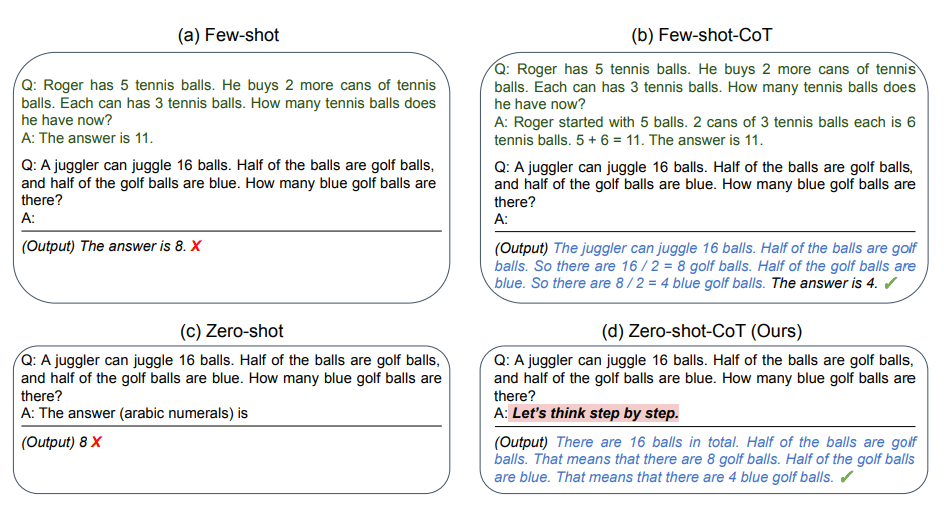
    @webmaxru from https://promptengineering.rocks/


    If you want to take a short training to upskill in the prompt engineering go to: https://learn.deeplearning.ai/chatgpt-prompt-eng/lesson/3/iterative


    PS: Buildstuff speakers twitter / x account list currated by me
    @Tygas
  • UI trends in 2023 by @tejaskumar_


    React is the slowest way to build apps.
    Qwik ships only 1Kb of JS as uses deterministing approach to give you only code you need while you havent’t triggered it.


    @tejaskumar_

  • Your First AI App using ChatGPT and LaMDA


    Vercel has a multi model SDK, where you can write same code and jest by adding different SDK communicate with different models.

    Using #opensource models like google LaMa or meta llama as you do not need to pay for licence.

    Run models locally with Ollama

    Model does need context, so you need to send

    Workshop Code

  • Create Atomic Habits to Become a Better Developer #buildstuffconf

    Create Atomic Habits to Become a Better Developer #buildstuffconf

    • Habit Formation:
      • Describes the four stages of habit formation: cue, craving, response, reward.
      • Outlines four rules for building good habits, corresponding to each stage.
      • Uses the example of checking phone notifications as a habit to explain the rules.
    • Implementation of Habits:
      • Shares personal habits focused on becoming a better developer.
      • Emphasizes setting specific implementation intentions, stacking habits, and bundling new habits with desired activities.
      • Highlights the importance of reducing friction, making actions easy, and connecting actions immediately after completion.
      • Advocates for habit tracking as a gamification technique for maintaining streaks.
      • Two minute rule – always stay below the point where it feels like a work. Do at least one #coursera
      • Reduce friction – minimize actions you need to take ( have a bookmarked page, setted up enviroment)

    • Breaking Bad Habits:
      • Discusses strategies for making bad habits unattractive, difficult, and unsatisfying.
      • Stresses the value of an accountability partner and even publishing a habit contract to the world.
      • A commitment device A choice you make in the present tht controls your actions in the future
    • Results and Impact:
      • Reports personal success using these habits, including a job promotion and improved focus.
      • Encourages the audience to start working on tiny habits for personal development.
    • Q&A:
      • Addresses questions about the duration of using these techniques, adapting habits to circumstances, and the applicability of habits to developers at different career stages.
    • Key Takeaways:
      • Small, consistent changes lead to significant results.
      • Lifelong learning is crucial for personal and professional development.
      • Personal examples demonstrate the effectiveness of atomic habits.

    #buildstuff2022

    Official slides: https://www.slideshare.net/NatanSilnitsky/create-atomic-habits-to-become-a-better-developer

    @NSilnitsky

  • Kevlin Henney – Refactoring Is Not Just Clickbait #buildstuffconf

    Kevlin Henney – Refactoring Is Not Just Clickbait #buildstuffconf

    • Refactoring as Design Practice: Henney emphasizes that refactoring is not just about quick shortcuts or large-scale re-engineering. It is a design practice essential for maintaining code quality and understanding.

    Make code as open to modification as possible.
    Keep code simple by resisting the temptation to make it extensible in the absence of any requirements to do so.
    • Complexity and Developers: Developers are drawn to complexity, often seeking creative solutions to problems. However, Henney suggests that refactoring is a way to navigate complexity, making code more understandable and manageable.
    • Technical Debt: Henney distinguishes between possessing technical debt and unmanaged technical debt. He argues that the possession of technical debt is not a problem; the key is how well it is managed and structured.
    • Metaphor for Messy Code: Henney introduces a metaphor for messy code, describing how developers can’t stop thinking about it. Refactoring provides a way to take oneself to a clean and tiny context, making developers feel comfortable and safe while working on it.
    • Refactoring Process: Refactoring is portrayed as a process of discovery and recognition, a reactive design practice. It involves restructuring software through a series of small, focused changes that do not alter the observable semantic behavior of the software. Automation is associated with refactoring, but the focus is on preserving the program’s behavior.